


Beer
Ingredients
The basic ingredients of beer are
water; a starch source, such as
malted
barley,
able to be fermented (converted into alcohol); a
brewer's
yeast to produce the fermentation; and a flavouring such as
hops. A mixture of starch
sources may be used, with a secondary starch source, such as corn, rice or
sugar, often being termed an
adjunct,
especially when used as a lower-cost substitute for malted barley.
Less widely used starch sources include
millet,
sorghum
and
cassava
root in
Brewing
The process of making beer is
known as brewing. A dedicated building for the making of beer is called a
brewery,
though beer can be made in the home and has been for much of its history. A
company that makes beer is called either a brewery or a
brewing
company. The purpose of brewing is to convert the starch source into
a sugary liquid called
wort and to convert the wort into the
alcoholic beverage known as beer in a
fermentation process effected by
yeast.
The first step, where the wort is
prepared by mixing the starch source (normally malted barley) with hot water, is
known as "mashing".
Hot water is mixed with crushed malt or malts (known as "grist") in a
mash tun.
The mashing process takes around 1 to 2 hours, during which the starches are
converted to sugars, and then the sweet wort is drained off the grains. The
grains are now washed in a process known as "sparging". This washing allows the
brewer to gather as much of the fermentable liquid from the grains as possible.
The process of filtering the spent grain from the wort and sparge water is
called wort separation. The traditional process for wort separation is
lautering,
in which the grain bed itself serves as the filter medium. Some modern breweries
prefer the use of filter frames which allow a more finely ground grist. Most
modern breweries use a continuous sparge, collecting the original wort and the
sparge water together. However, it is possible to collect a second or even third
wash with the not quite spent grains as separate batches. Each run would produce
a weaker wort and thus a weaker beer. This process is known as second (and
third) runnings. Brewing with several runnings is called parti gyle brewing.
The sweet wort collected from
sparging is put into a kettle, or "copper", (so called because these vessels
were traditionally made from
copper) and boiled,
usually for about one hour. During boiling, water in the wort evaporates, but
the sugars and other components of the wort remain; this allows more efficient
use of the starch sources in the beer. Boiling also destroys any remaining
enzymes left over from the mashing stage.
Hops are added during
boiling as a source of bitterness, flavour and aroma. Hops may be added at more
than one point during the boil. The longer the hops are boiled, the more
bitterness they contribute, but the less hop flavour and aroma remains in the
beer.
After boiling, the hopped wort is
now cooled, ready for the yeast. In some breweries, the hopped wort may pass
through a hopback, which is a small vat filled with hops, to add aromatic hop
flavouring and to act as a filter; but usually the hopped wort is simply cooled
for the fermenter, where the
yeast
is added. During fermentation, the wort becomes beer in a process which requires
a week to months depending on the type of yeast and strength of the beer. In
addition to producing alcohol, fine
particulate
matter suspended in the wort settles during fermentation. Once
fermentation is complete, the yeast also settles, leaving the beer clear.
Fermentation is sometimes carried out in two stages,
primary and secondary. Once most of the alcohol has been produced during primary
fermentation, the beer is transferred to a new vessel and allowed a period of
secondary fermentation. Secondary fermentation
is used when the beer requires long storage before packaging or greater clarity.
When the beer has fermented, it is
packaged
either into casks for
cask ale or kegs,
aluminum cans,
or bottles for other sorts of beer.
Varieties
The most
common method of categorizing beer is by the behaviour of the yeast used in the
fermentation process. In this method, beers using a fast-acting yeast which
leaves behind residual sugars are termed "top-fermented" and referred to as
Ales. Beers using a slower-acting yeast,
fermented at lower temperatures, which removes most of the sugars, leaving a
clean, dry beer, are termed "bottom-fermented" and referred to as Lagers.
Lager
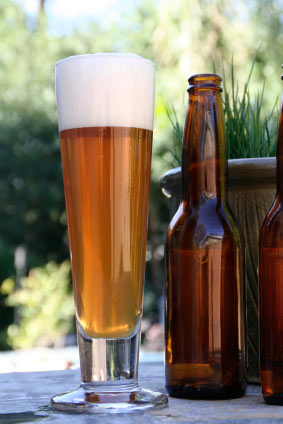
Bottom fermented beer. This is the "style" of beer is the
result of the growth of national breweries, and their ability to brew a beer
that appeals to the most people possible, at a competitive price. It is brewed
with significant quantities of grain other than barley malt; a slightly sweet,
lightly hopped, straw colored, very effervescent beer.
Ale
A top fermented beer.
Ale is similar to lager, but usually richer, heavier and more complex.
Ale can vary from blond to black in color.
Pilsner
This style is a light-straw colored, full bodied, lagered,
bottom fermented beer originating from Pilsner, Czechoslavakia.
Pale to golden, elegantly dry and crisp.
The most copied and widely brewed beer style in the world.
Light Beer
A pale, watery, low-calorie, low-strength pilsner style
beer. An American original. Some
light beers are actually the breweries normal product but with water added.
Bitter
This top-fermented classic ale style offers a deep, rich
brown or ruby color with a malty, very lightly hopped flavor. Ordinary bitter is
low to medium in alcohol content, while extra special bitter is medium to high.
True bitter is only lightly carbonated.
Pale Ale
A classic British top-fermented ale.
Color ranges from golden to copper.
European versions tend to be heavily malted, and the American versions
tend to lean more toward a more prevalent abundance of hops.
India pale ale, so named because it had to endure long sea
voyages from breweries in England to India during British rule, had to be a high
gravity, well hopped brew to enable it to last the voyage and not spoil. Pale or
golden to deep copper in color.
Quite hoppy with nuances of fruit and/or flowers.
Brown Ale
Brown ale is a traditional British, top fermented ale.
Flavor and color are very much like a pale ale, but sweeter and darker with a
light body.
Scottish Ale
Amber to red to dark brown in color.
is is a strong (high alcohol) brew made with Scottish malted barley. Less
hoppy than English brews, there are hints of caramel and, sometimes, a slight
tang of smoke in the flavor. Usually sweet and rich with a creamy head.
Strong Ale
Also called, Old Ale, this strong (high alcohol) brew is
particular for its dark color (almost opaque) and a very sweet flavor that masks
the heat of an alcohol content that can reach 6-8% by volume.
Barleywine
Barleywine is a very dark, almost opaque ale.
A strong ale, this is the most alcoholic style of beer. The
addition of a healthy amount of hops forms a powerful flavor triad of sweet
malt, bitter hops, and warm alcohol. Should be sipped like brandy and can
improve with age.
Bock Beer
This style is fermented with bottom fermenting yeast and is
"lagered" (aged) for at least a month. A full bodied, stronger richer lager.
Doppelbock Beer
Double bock, very full-bodied and extra strong.
Can be amber, red amber, dark brown.
Often sweet and creamy, sometimes fruity or tangy.
Porter
A blend of three ales (old, new and weak).
This is a dry, roasty brew that is darker than amber, and lighter than
"stout". Usually very hoppy and malty.
Strong in flavor and alcohol content.
Stout
Very dark to black.
Tastes range from charcoal to molasses with a malty sweetness to a bitter
sweetness. Serve warm.
Stout was born from porter.
Black & Tan
A mixture of stout or porter with a light or pale ale.
A layered drink when made from scratch, a mixture when bottled.
Dry Stout or Irish Stout
Deep dark red to black with a rich creamy head, roasty with
a medium to high hop flavor balanced by hint of coffee and/or caramel.
Oatmeal Stout
A stout with any amount of oatmeal added.
A heavy, sweet beer.
Wheat Beer
Top-fermented beer made with wheat malts. Pale to straw to
deep copper or brown.
Lambic
A Belgian style
referred to tase wise being horsey, sweaty or tart. Can range from
well-carbonated to almost flat, with a slightly sour aftertaste.
Fruit Lambics
A blend of lambics (usually young and old) with fruit
added. Tart and pale.
Varieties include Kriek (cherry), Framboise (raspberry), Peche (pear),
Faro (candy sugar), Vigneronne or Muscat (grape), Cassis (black currant),
Mirabelle (plum), Fraises (strawberry), Exotic (pineapple) Apricot, Banana
Trappist
This ale is dark brown with a ruby hue, is fruity and
heavily sedimented and is strong. True Trappist is brweed at Trappist
monasteries in
Hefe
An unfiltered wheat beer, cloudy and bottle-conditioned
with yeast. Tastes of clove or
citrus are prevelant. Pour to
evacuate the sediment out of the bottom; squeeze a lemon wedge into the creamy
head.
Witbier or White Beer
Originates from
Dunkel
Refers to any dark lager from deep red to black.
Full bodied with heavy malt character.
Clean and crisp with heavy malt character.
Clean and crisp with caramel undertones.
Sometimes they are well hopped, but almost always bitter.
Note: some dark wheat beers (ale) are referred to as Dunkel.
Marzen/Vienna/Oktoberfest
Amber to pale copper.
Very malty and medium to strong in potency.
Traditionally, when the last of the winter season's beer was brewed each
year in March, it was a made to be a little stronger than usual, so that the
alcohol content would preserve it through the summer and meant to be imbibed in
late September and early October.
 © S&D Liquor, Inc. - All rights reserved
You must be 21 years or older to view or enter this web site.
All Rights Reserved. Web Design by E*Tap Marketing